
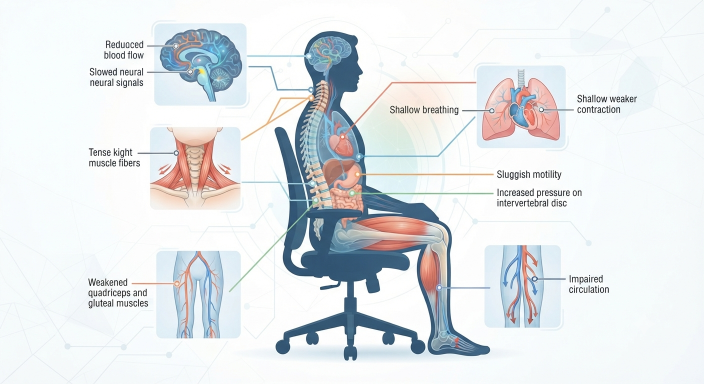
Modern lifestyles have made sitting for long periods a normal part of everyday life. Whether someone works at a computer, attends online classes, drives for several hours, or spends leisure time watching television, much of the day can be spent in a seated position.
Although sitting may seem harmless, spending too much time being physically inactive can affect several body functions. From muscle stiffness and back discomfort to changes in metabolism and cardiovascular health, prolonged sitting can have consequences that are not always immediately noticeable.
1. Your Muscles Become Less Active
When you sit for extended periods, several muscle groups remain relatively inactive.
The muscles in your legs, hips, and back may not receive enough movement throughout the day. Over time, reduced activity can contribute to muscle weakness and stiffness.
The hip flexors, which help move your thighs towards your body, remain in a shortened position while sitting. This may contribute to tightness and discomfort, particularly when combined with poor posture.
Standing, walking, and performing simple mobility exercises throughout the day can help keep muscles active.
2. Prolonged Sitting Can Affect Your Posture
Sitting for long hours, particularly while using a computer or mobile phone, can encourage unhealthy posture.
Many people gradually lean forward, round their shoulders, or bend their necks towards screens.
These positions can increase strain on the neck, shoulders, and lower back.
Poor sitting posture may contribute to:
- Neck stiffness and discomfort.
- Shoulder tension.
- Lower back pain.
- Reduced flexibility.
- Muscle fatigue.
Using an adjustable chair, keeping the screen at a comfortable height, and supporting the lower back can improve sitting comfort.
3. Your Blood Circulation May Become Slower
Movement helps the muscles in your legs support blood circulation.
When someone remains seated for a long time, the muscles responsible for helping move blood through the lower body are less active.
This can contribute to blood pooling in the legs and swelling around the ankles.
Prolonged immobility can also increase the risk of developing blood clots, particularly during long-distance travel or in people with additional medical risk factors.
Deep vein thrombosis is a potentially serious condition that requires medical attention.
Regular movement, ankle exercises, and walking breaks can help reduce prolonged inactivity.
4. Sitting Too Much Can Affect Metabolism
The body uses energy throughout the day, even while resting. However, prolonged sitting reduces overall physical activity and daily energy expenditure.
Over time, a highly sedentary lifestyle may contribute to metabolic problems.
Research has associated excessive sedentary behaviour with an increased risk of:
- Type 2 diabetes.
- Cardiovascular disease.
- Weight gain.
- Metabolic syndrome.
- Poor blood sugar regulation.
Muscle contractions during walking and other activities help the body use glucose and regulate metabolic processes.
Breaking up long sitting periods with movement can support better metabolic health.
5. Your Heart Health May Be Affected
Long periods of physical inactivity are associated with an increased risk of cardiovascular disease.
When people spend most of their day sitting and do not get enough physical activity, they may develop risk factors such as high blood pressure, unhealthy cholesterol levels, and increased body weight.
Over time, these factors can affect heart health.
It is important to understand that sitting itself is not the only factor. Diet, smoking, genetics, sleep, and overall physical activity also influence cardiovascular health.
Regular exercise and reducing prolonged sedentary time are important parts of maintaining a healthy heart.
6. Sitting All Day May Affect Your Mental Well-Being
Physical activity can influence mood, stress levels, and mental well-being.
Spending most of the day indoors at a desk may reduce opportunities for movement, sunlight exposure, and social interaction.
Some people may experience increased stress, reduced motivation, or difficulty concentrating when they remain inactive for long periods.
Walking breaks can provide a mental refresh and help people return to their tasks with improved concentration.
Outdoor activity may also provide opportunities to relax and disconnect from work-related pressure.
7. Your Digestive System May Feel the Effects
Physical movement supports normal digestive activity.
When someone remains inactive for most of the day, bowel movement patterns may become less regular, particularly when combined with inadequate water intake and a low-fibre diet.
This can contribute to constipation, bloating, and digestive discomfort.
Walking after meals, drinking enough water, and eating fibre-rich foods can support healthy digestion.
People experiencing persistent digestive symptoms should consult a healthcare professional rather than assuming that sitting is the only cause.
8. Simple Ways to Reduce the Effects of Sitting
You do not necessarily need to stop working at a desk to become more active. Small changes throughout the day can make a difference.
Here are some practical habits:
Take regular movement breaks: Stand up and walk for a few minutes after periods of sitting.
Use standing opportunities: Take phone calls while standing or walk during short meetings when practical.
Stretch your body: Gentle neck, shoulder, back, and leg stretches can help reduce stiffness.
Walk after meals: A short walk after eating can support digestion and blood sugar management.
Use the stairs: Choose stairs instead of lifts when appropriate.
Exercise regularly: Include walking, cycling, swimming, or strength training in your weekly routine.
The World Health Organization recommends that adults aim for 150–300 minutes of moderate-intensity aerobic activity per week, or an equivalent amount of vigorous activity.
9. Creating a Healthier Workstation
Your workspace can also influence how much strain your body experiences.
Keep your feet comfortably supported, position your monitor near eye level, and use a chair that supports your back.
Avoid keeping your phone or keyboard too far away, as this may encourage unnecessary leaning.
If possible, alternate between sitting and standing rather than remaining in one position throughout the day.
The goal is not to maintain a perfect posture every minute but to change positions regularly and stay physically active.